Beatriz Santiago Muñoz: ORIANA and GOSILA
Posted by | Amy Beste | Posted on | October 26, 2023
Thursday, October 26, 6:00 p.m.
Join San Juan–based artist Beatriz Santiago Muñoz for the Chicago premiere of her new feature ORIANA.

Beatriz Santiago Muñoz, ORIANA, 2023. Courtesy of the artist.
“The videos of Beatriz Santiago Muñoz exhibit a sensibility deeply informed by long and careful looking at the tropical landscape of her native Puerto Rico.”–Erica Dawn Lyle, Art In America
“Less a speculative vision about what might be and more a provocation of how other futures are actualized in the present.” – Walker Art Center
Program
ORIANA
2023, Puerto Rico, 78 minutes
In Spanish with English subtitles, Format: DCP
Beatriz Santiago Muñoz’s (MFA 1997) films explore the physical and symbolic stories of the Caribbean. In ORIANA, a band of feminist warriors takes refuge in a verdant Puerto Rican landscape. Set in the wake of Hurricane Maria and featuring performances by a group of San Juan–based artists and activists, the film takes inspiration from French writer and theorist Monique Wittig’s radical 1969 novel Les Guérillères. As Muñoz’s characters move through forests, abandoned industrial sites, and colonial ruins, ORIANA visualizes the possibilities for creating a decolonial and feminist world.
GOSILA
2018, Puerto Rico, 10 minutes
In Spanish with English subtitles, Format: DCP
A film about disorder, sense-making from the ground up, slowness, and the work in the days after a hurricane.
About the artist
Beatriz Santiago Muñoz lives and works in San Juan, Puerto Rico. Her expanded moving-image practice brings together Boalian theater, experimental ethnography, and feminist thought to focus on the sensorial unconscious of anti-colonial movements and everyday poetic work in the Caribbean. Her artworks have been featured in numerous solo and group exhibitions internationally, including solo shows at Argos Centre for Audiovisual Art, Brussels; Pivô, São Paulo; CRAC Alsace, Altkirch, France; Espacio Odeón, Bogotá; Pérez Art Museum Miami; and the New Museum, New York. She received a master of fine arts from the School of the Art Institute of Chicago in 1997.
Accessibility
This event will have real-time captions (CART). For other accessibility requests, please visit saic.edu/access or contact cate@saic.edu.
Tags: Beatriz Santiago Muñoz > Experimental > Les Guérillères > Monique Wittig > Puerto Rico
Lawrence Andrews: mythicPotentialities
Posted by | Amy Beste | Posted on | October 12, 2023
Thursday, October 12, 6:00 p.m.
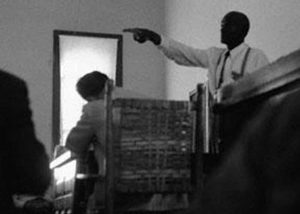
Enthralling in form and vision, Lawrence Andrews’ works are kaleidoscopic explorations of Blackness through mass media and popular culture.
In the genre-defying imageless video mythicPotentialities (2019), Andrews examines the murder of Emmett Till, the trial that followed, and the ways these events have been mediated through artistic and mass media. Focusing on Till’s great uncle Moses Wright, who testified at the trial, Andrews asks what happens when we imagine Wright’s life beyond the limited events that came to define him.
2019, Lawrence Andrews, USA, 60 mins
In English, Format: Digital
Presented in partnership with SAIC’s Video Data Bank.
About the artist
Lawrence Andrews’s practice spans video, photography, and installation. Employing multi-layered strategies of appropriation, he often focuses on media and culture, suggesting that “culture is all we are as people; we speak about it, look at ourselves through it, and ultimately change because of it.” Andrews’s work has shown extensively throughout the US and internationally on television, at major film festivals, and in museums and galleries, including the Whitney Museum of American Art, New York; the Museum of Modern Art, New York; the San Francisco Museum of Modern Art; the Berkeley Art Museum and Pacific Film Archive; and the American Film Institute, Los Angeles; among others. He has received numerous grants and fellowships, including a Rockefeller Intercultural Documentary Fellowship and two National Endowment for the Arts Artist Fellowships.
Accessibility
This event will have real-time captions (CART). For other accessibility requests, please visit saic.edu/access or contact cate@saic.edu.
Tags: Black Noise > Emmett Till > Experimental Essay > Lawrence Andrews > Moses Wright > sound art > Video Data Bank
Želimir Žilnik: LOGBOOK SERBISTAN
Posted by | Amy Beste | Posted on | October 7, 2023
Saturday, October 7, 1:00 p.m

Želimir Žilnik, LOGBOOK SERBISTAN, 2015. Courtesy of the artist
For more than 50 years, renowned Serbian director Želimir Žilnik has produced a body of trailblazing and politically committed films. A key member of Yugoslavia’s rebellious Black Wave film movement of the 1960s and a pioneer of docufiction, Žilnik’s perspective was shaped by atrocity at the hands of Nazis, Yugoslavia’s turbulent history and dissolution, and periods of exile. Over the years, he has used his camera to explore the experiences of outsiders of all kinds, depicting complicated social and political realities from a distinctly human perspective.
Join us for three programs that cover the range of his career, including his essential early SHORT FILMS (Thursday, October 5, 6:00 p.m.), mid-career feature MARBLE ASS (1995) (Friday, October 6, 6:00 p.m.), and recent award-winner, LOGBOOK SERBISTAN (2015).
LOGBOOK SERBISTAN
2015, Želimir Žilnik, Serbia, 94 minutes
In multiple languages with English subtitles, Format: DCP
Over the last two decades, Žilnik has produced a startlingly original body of work on the struggles of undocumented immigrants and refugees. In the award-winning LOGBOOK SERBISTAN, he casts Middle Eastern and African refugees fleeing war and poverty as versions of themselves in stories based on their experiences seeking asylum. Most hope to reach the European Union (EU), yet, as borders close, find themselves stuck in overwhelmed refugee centers in Serbia, which is itself excluded from the EU. Harrowing and humorous, Žilnik’s film is a masterful human drama and incisive portrait of border politics.
Presented in partnership with The Center for Eastern European and Russian/Eurasian Studies at the University of Chicago, the University of Illinois at Chicago’s (UIC) School of Literatures, Cultural Studies, and Linguistics and UIC’s School of Art and Art History.
About the artist
Želimir Žilnik is an artist-filmmaker from Novi Sad, Serbia. He has made more than 50 feature and short films which have been exhibited internationally. Žilnik has been the subject of major career film retrospectives at Centre Pompidou, Paris, 2019; Cinemateca Argentina, 2018; Mar del Plata International Film Festival, 2017; Anthology Film Archive, New York, and Harvard Film Archive, 2017; Ankara International Film Festival, 2016; Doclisboa, 2015; Arsenal, Berlin, 2015; CINUSP, São Paulo, 2014; Thessaloniki International Film Festival, 2014; and more. His work has also been featured at Documenta, Kassel; Venice Biennale; Institute of Contemporary Arts, London; Museum moderner Kunst Stiftung Ludwig Wien; Barcelona Museum of Contemporary Art; Museo Universitario Arte Contemporaneo, Mexico City; The Museum of Modern Art, New York; The Renaissance Society, Chicago; National Gallery of Art, Washington DC; Edith-Russ-Haus für Medienkunst, Oldenburg’ Lentos Art Museum, Linz; Museum für Moderne Kunst, Frankfurt; Deutsches Historisches Museum and Galleria Nazionale d’Arte Moderna e Contemporanea, Rome; among others.
Related Events
SHORT FILMS (Thursday, October 5, 6:00 p.m.)
MARBLE ASS (Friday, October 6, 6:00 p.m.)
Accessibility
This event will have real-time captions (CART). For other accessibility requests, please visit saic.edu/access or contact cate@saic.edu.
Želimir Žilnik: MARBLE ASS
Posted by | Amy Beste | Posted on | October 6, 2023
Friday, October 6, 6:00 p.m.

Želimir Žilnik, MARBLE ASS, 1995. Courtesy of the artist.
For more than 50 years, renowned Serbian director Želimir Žilnik has produced a body of trailblazing and politically committed films. A key member of Yugoslavia’s rebellious Black Wave film movement of the 1960s and a pioneer of docufiction, Žilnik’s perspective was shaped by atrocity at the hands of Nazis, Yugoslavia’s turbulent history and dissolution, and periods of exile. Over the years, he has used his camera to explore the experiences of outsiders of all kinds, depicting complicated social and political realities from a distinctly human perspective.
Join us for three programs that cover the range of his career, including his essential early SHORT FILMS (Thursday, October 5, 6:00 p.m.), mid-career feature MARBLE ASS (1995), and recent award-winner, LOGBOOK SERBISTAN (2015) (Saturday, October 7, 1:00 p.m.).
MARBLE ASS
1995, Želimir Žilnik, FR Yugoslavia, 87 minutes
In Serbian with English subtitles, Format: Beta video transferred to Digital video
Winner of the Teddy for best feature at the 1995 Berlin Film Festival, MARBLE ASS is Žilnik’s breakthrough celebration of queer life in former Yugoslavia, shot during the Balkans War. Staring the late Merlinka as a version of herself, the film follows the lives of Merlin and Sanela—two trans women who turn to sex work as a means of financial security and an act of political resistance against the militant machismo of wartime culture. Their routine is shattered when Johnny, Marlin’s ex-lover, is decommissioned from the army and arrives at her house full of barely repressed rage. Referencing Paul Morrisy’s FLESH (1968) and Billy Wilder’s SOME LIKE IT HOT (1959), MARBLE ASS is a radically exhilarating mix of political allegory, screwball humor, empathy, and Belgrade’s ’90s underground.
Presented in partnership with The Center for Eastern European and Russian/Eurasian Studies at the University of Chicago, the University of Illinois at Chicago’s (UIC) School of Literatures, Cultural Studies, and Linguistics and UIC’s School of Art and Art History.
About the artist
Želimir Žilnik is an artist-filmmaker from Novi Sad, Serbia. He has made more than 50 feature and short films which have been exhibited internationally. Žilnik has been the subject of major career film retrospectives at Centre Pompidou, Paris, 2019; Cinemateca Argentina, 2018; Mar del Plata International Film Festival, 2017; Anthology Film Archive, New York, and Harvard Film Archive, 2017; Ankara International Film Festival, 2016; Doclisboa, 2015; Arsenal, Berlin, 2015; CINUSP, São Paulo, 2014; Thessaloniki International Film Festival, 2014; and more. His work has also been featured at Documenta, Kassel; Venice Biennale; Institute of Contemporary Arts, London; Museum moderner Kunst Stiftung Ludwig Wien; Barcelona Museum of Contemporary Art; Museo Universitario Arte Contemporaneo, Mexico City; The Museum of Modern Art, New York; The Renaissance Society, Chicago; National Gallery of Art, Washington DC; Edith-Russ-Haus für Medienkunst, Oldenburg’ Lentos Art Museum, Linz; Museum für Moderne Kunst, Frankfurt; Deutsches Historisches Museum and Galleria Nazionale d’Arte Moderna e Contemporanea, Rome; among others.
Related Events
ŽELIMIR ŽILNIK: SHORT FILMS (Thursday, October 5, 6:00 p.m.)
LOGBOOK SERBISTAN (Saturday, October 7, 1:00 p.m.)
Accessibility
This event will have real-time captions (CART). For other accessibility requests, please visit saic.edu/access or contact cate@saic.edu.
Tags: Balkans War > Docudrama > Docufiction > Experimental Narrative > FR Yugoslavia > Merlinka > Queer > Želimir Žilnik
Želimir Žilnik: Short Films
Posted by | Amy Beste | Posted on | October 5, 2023
Thursday, October 5, 6:00 p.m.

Želimir Žilnik, INVENTORY, 1975. Courtesy of the artist.
For more than 50 years, renowned Serbian director Želimir Žilnik has produced a body of trailblazing and politically committed films. A key member of Yugoslavia’s rebellious Black Wave film movement of the 1960s and a pioneer of docufiction, Žilnik’s perspective was shaped by atrocity at the hands of Nazis, Yugoslavia’s turbulent history and dissolution, and periods of exile. Over the years, he has used his camera to explore the experiences of outsiders of all kinds, depicting complicated social and political realities from a distinctly human perspective.
Join us for three programs that cover the range of his career, including his essential early SHORT FILMS, mid-career feature MARBLE ASS (1995) (Friday, October 6, 6:00 p.m.), and recent award-winner, LOGBOOK SERBISTAN (2015) (Saturday, October 7, 1:00 p.m.) Žilnik will be in attendance at the Friday and Saturday screenings.
This program brings together four of Žilnik’s most powerful and innovative short films. Shot in Yugoslavia and West Germany, each captures the experiences of people living on the outskirts of society through reenactment, improvisation, repetition, and dark humor.
1971–1977, Želimir Žilnik, Yugoslavia/West Germany, 71 minutes
Multiple languages with English subtitles, Format: Digital Video
Presented in partnership with The Center for Eastern European and Russian/Eurasian Studies at the University of Chicago, the University of Illinois at Chicago’s (UIC) School of Literatures, Cultural Studies, and Linguistics and UIC’s School of Art and Art History.
Program
BLACK FILM
1971, Yugoslavia, 14 minutes
In Serbian with English subtitles
BLACK FILM is an early example of Žilnik’s political engagement, expressed through his decision to provide shelter to a group of unhoused men in his family’s small apartment. While his guests enjoy themselves, the filmmaker presses social workers, government officials, police, and even ordinary citizens for a more permanent solution. When his camera captures their indifference, his film becomes an indictment against the powers that be.
UPRISING IN JAZAK
1973, Yugoslavia, 18 minutes
In Serbian with English subtitles
Residents of Jazak, a small village in eastern Yugoslavia, reenact the ways they resisted Nazi forces during WWII—hiding guns, cutting telegraph wires, sabotaging food, and caring for Partisan soldiers. Žilnik’s camera captures stories of atrocity and grief alongside those of solidarity and mutual aid.
INVENTORY
1975, West Germany, 9 minutes
In multiple languages with English subtitles
A short structural documentary experiment that takes stock of West Germany’s “guest workers”—Yugoslavs, Italians, Turks, and Greeks—living in an old building in the center of Munich.
MARKET PEOPLE
1977, Yugoslavia, 30 minutes
Serbian with English subtitles
Žilnik takes his camera to Šabac Fair, one of the largest flea markets and festivals in the Balkans, to meet with the people who run it. Cutting between tradespeople, performers, musicians, and fair employees, Žilnik highlights its chaotic and cooperative community.
About the artist
Želimir Žilnik is an artist-filmmaker from Novi Sad, Serbia. He has made more than 50 feature and short films which have been exhibited internationally. Žilnik has been the subject of major career film retrospectives at Centre Pompidou, Paris, 2019; Cinemateca Argentina, 2018; Mar del Plata International Film Festival, 2017; Anthology Film Archive, New York, and Harvard Film Archive, 2017; Ankara International Film Festival, 2016; Doclisboa, 2015; Arsenal, Berlin, 2015; CINUSP, São Paulo, 2014; Thessaloniki International Film Festival, 2014; and more. His work has also been featured at Documenta, Kassel; Venice Biennale; Institute of Contemporary Arts, London; Museum moderner Kunst Stiftung Ludwig Wien; Barcelona Museum of Contemporary Art; Museo Universitario Arte Contemporaneo, Mexico City; The Museum of Modern Art, New York; The Renaissance Society, Chicago; National Gallery of Art, Washington DC; Edith-Russ-Haus für Medienkunst, Oldenburg’ Lentos Art Museum, Linz; Museum für Moderne Kunst, Frankfurt; Deutsches Historisches Museum and Galleria Nazionale d’Arte Moderna e Contemporanea, Rome; among others.
Related Events
MARBLE ASS (Friday, October 6, 6:00 p.m.)
LOGBOOK SERBISTAN (Saturday, October 7, 1:00 p.m.)
Accessibility
This event will have real-time captions (CART). For other accessibility requests, please visit saic.edu/access or contact cate@saic.edu.
INTERIOR LIVES: Sojourner Truth Festival of the Arts
Posted by | Amy Beste | Posted on | September 14, 2023
Thursday, September 14, 6:00 p.m.
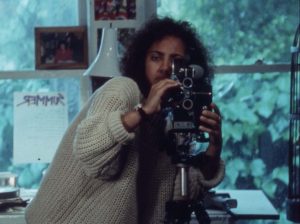
Aarin Burch, SPIN CYCLE, 1991. Courtesy of the artist. (2)
In 1976, an extraordinary group of Black feminist artists organized the first-ever Black women’s film festival: the Sojourner Truth Festival of the Arts. Four decades later, a new generation of artists, curators, and scholars have revived the festival.
INTERIOR LIVES opens a weekend of events at the Gene Siskel Film Center by bringing together 10 exquisite films from the ‘80s, ‘90s, and today that foreground Black women’s interiority. Featuring works by Aarin Burch, Zeinabu irene Davis, Cheryl Dunye, Jada-Amina, S. Pearl Sharp, Cauleen Smith, Paige Taul, Yvonne Welbon, and Fronza Woods and a post-screening discussion with Burch, Davis, Jada-Amina, and Taul, moderated by Sarah Oberholtzer, Program Manager, Sisters in Cinema.
1981, 2020, Various directors, 84 minutes
In English | Format: 16MM and digital
Presented in partnership with the University of Chicago’s Film Studies Center, Sisters in Cinema, and the Gene Siskel Film Center, with support from the City of Chicago Department of Cultural Affairs and Special Events (DCASE). Curated by Allyson Nadia Field, Hayley O’Malley, and Yvonne Welbon.
Program
DREAMS OF PASSION
Aarin Burch, 1989, 4 minutes / Format: 16mm, In English
Featuring contemporary dancers Matima Hadi and Debra Floyd, DREAMS OF PASSION explores creative and sexual desire between two Black women.
SPIN CYCLE
Aarin Burch, 1991, 6 minutes / Format: 16mm, In English
In this autobiographical look at filmmaking and romantic relationships, Aarin Burch ruminates on how to represent race, the ways her films might objectify women, and being pigeonholed as a Black lesbian filmmaker.
CYCLES
Zeinabu irene Davis, 1989, 16 minutes / Format: Digital Video, In English
Zeinabu irene Davis combines live action, animation, and still photography in this beautiful portrait of a woman taking stock of her life and performing acts of self-care.
JANINE
Cheryl Dunye, 1990, 9 minutes / Format: Digital Video, In English
In this candid self-portrait, Cheryl Dunye (THE WATERMELON WOMAN) tells the story of a fraught teenage friendship with a white upper-middle class girl. Through direct address and high school snapshots, Dunye relays the often-painful process of searching for—and ultimately affirming—her Black lesbian identity.
I’M NOT GOING TO DIE, I’M GOING HOME LIKE A SHOOTING STAR
Jada-Amina, 2020, 15 minutes / Format: Digital Video, In English
Taking its title from Sojourner Truth’s own words, Jada-Amina’s film explores the Black ecstatic through archival footage, Black cultural icons, and vignettes of loved ones.
BACK INSIDE HERSELF
Pearl Sharp, 1984, 4 minutes / Format: Digital Video, In English
First place winner at the San Francisco Poetry Film Festival and the Black American Cinema Society’s Independent Film Awards, S. Pearl Sharp’s debut film is a visual poem on identity and the assertion of self, starring the magnetic actor Barbara O. Jones (DAUGHTERS OF THE DUST, BUSH MAMA).
CHRONICLES OF A LYING SPIRIT (BY KELLY GABRON)
Cauleen Smith, 1992, 6 minutes / Format: 16mm, In English
A fabulist short that traces a circuitous history from the Middle Passage to late-1980s, Cauleen Smith’s film concludes with an unflinching monologue about class privilege and artistic responsibility, declaring: “The only way I’m gonna get on TV is to make my own goddamn tapes and play them for myself, my sisters, my brothers. We will be seen, and we will be heard.”
10:28,30
Paige Taul, 2019, 5 minutes / Format: Digital Video, In English
Part of the larger constellations of works concerning familial ties, 10:28,30 explores the relationships between Paige Taul, her twin sister, and their mother.
MONIQUE
Yvonne Welbon, 1991, 2 minutes / Format: Digital Video, In English
Yvonne Welbon reflects on a childhood experience of racism and considers how deeply it is ingrained in the fabric of society, pervasive enough to infect even children’s play.
FANNIE’S FILM
Fronza Woods, 1981, 15 minutes / Format: Digital Video, In English
A portrait of a 65-year-old woman as she tells stories about her life while cleaning a Pilates studio. Challenging mainstream media’s stereotypes of women of color who earn their living as domestic workers, this seemingly simple documentary achieves a quiet revolution: the expressive portrait of a fully realized individual.
Accessibility
This event will have real-time captions (CART). For other accessibility requests, please visit saic.edu/access or contact cate@saic.edu.
Tags: Aarin Burch > African-American > Allyson Nadia Field > Cauleen Smith > Cheryl Dunye > Experimental > Fronza Woods > Hayley O’Malley > Jada-Amina > Paige Taul > Personal Essay > S. Pearl Sharp > Sojourner Truth Festival of the Arts > Yvonne Welbon > Zeinabu irene Davis
Su Friedrich: TODAY
Posted by | Amy Beste | Posted on | September 7, 2023
Thursday, September 7, 8:30 p.m.
Join renowned filmmaker Su Friedrich for the Chicago premiere of her latest feature TODAY.

Su Friedrich, TODAY, 2022. Courtesy of the artist.
“Challenges us to look at what’s right in front of us.” – Rhea Nayyar, Hyperallergic
For nearly a half-century, Su Friedrich has played a pivotal role in American queer cinema and autobiographical film with her rich and often unflinching explorations of family, kinship, and society. Join us for two screenings featuring three landmark films, including SINK OR SWIM (1990), RULES OF THE ROAD (1993) (both screening on Thursday, September 7, 6:00 p.m.), and TODAY (2022).
Friedrich’s latest feature, TODAY, is a luminous personal essay on beauty, love, and loss. Endeavoring to live by and also question the maxim to “live in the moment,” Friedrich turns her camera to the world immediately in front of her: a neighborhood barbeque, a bucolic vacation, the brilliance of flowers—both natural and artificial—and the consecutive losses of loved ones. Hoping to ground herself in the everyday, the filmmaker finds herself increasingly contemplative, as memories and devastating experiences make claim to her limited time.
2022, USA, 57 minutes
In English, Format: Digital
About the artist
Su Friedrich has produced 23 films and videos since 1978. She is the recipient of many awards, including fellowships from the Rockefeller and Guggenheim foundations, a Herb Alpert Award, as well as numerous grants from the Jerome Foundation, New York Foundation for the Arts, New York State Council on the Arts, and Independent Television Service. Her work is widely screened in the United States, Canada, and Europe and has been the subject of retrospectives at the Museum of Modern Art, New York; the Whitney Museum of American Art, New York; the Rotterdam International Film Festival; the London LGBTIQ+ Film Festival; the Stadtkino,Vienna; The Cinematheque, Vancouver; the National Film Theater, London; the Buenos Aires International Festival of Independent Cinema; the New York LGBTQ+ Film Festival; the first Tokyo International Lesbian and Gay Film Festival; the Cork International Film Festival; the Wellington Film Festival; the Bios art center, Athens; and the Anthology Film Archives, New York. Friedrich taught film and video production at Princeton University from 1998–2023.
Related Event
SINK OR SWIM and RULES OF THE ROAD (both screening on Thursday, September 7, 6:00 p.m.)
Accessibility
This event will have real-time captions (CART). For other accessibility requests, please visit saic.edu/access or contact cate@saic.edu.
Su Friedrich: SINK OR SWIM and RULES OF THE ROAD
Posted by | Amy Beste | Posted on | September 7, 2023
Thursday, September 7, 6:00 p.m.
Join legendary filmmaker Su Friedrich for a screening of her contemporary classics SINK OR SWIM and RULES OF THE ROAD.

Su Friedrich, SINK OR SWIM, 1990. Courtesy of the artist.
“[A] personal chronicle about language, memory, and Dad that strikes hard, and deep.” – Manohla Dargis, The Village Voice
“[Friedrich] creates a film like a perfect short story.” – Stuart Klawans, The Nation
For nearly a half-century, Su Friedrich has played a pivotal role in American queer cinema and autobiographical film with her rich and often unflinching explorations of family, kinship, and society. Join us for two screenings featuring three landmark films, including SINK OR SWIM (1990), RULES OF THE ROAD (1993), and her latest feature, TODAY (2022) (screening Thursday, September 7, 8:30 p.m.).
Program
SINK OR SWIM
1990, USA, 48 minutes
In English, Format: 16mm
A landmark in autobiographical filmmaking, SINK OR SWIM is a wrenching portrait of a girl’s fraught relationship with her father. Unspooling in a series of 26 interlocking vignettes, the film chronicles punishments, neglect, and the tumultuous dissolution of her parents’ marriage, touching upon the father’s own childhood traumas and the girl’s emergence into adulthood. Friedrich brings together her own footage, archival film, and text into an evocative collage that underscores the shape-shifting relationship between past and present, family and self.
RULES OF THE ROAD
1993, USA, 31 minutes
In English, Format: 16mm
At once wry and piercing, RULES OF THE ROAD traces the arc of a love affair through the couples’ prized possession: a Cutlass Cruiser station wagon with fake wood paneling.
About the artist
Su Friedrich has produced 23 films and videos since 1978. She is the recipient of many awards, including fellowships from the Rockefeller and Guggenheim foundations, a Herb Alpert Award, as well as numerous grants from the Jerome Foundation, New York Foundation for the Arts, New York State Council on the Arts, and Independent Television Service. Her work is widely screened in the United States, Canada, and Europe and has been the subject of retrospectives at the Museum of Modern Art, New York; the Whitney Museum of American Art, New York; the Rotterdam International Film Festival; the London LGBTIQ+ Film Festival; the Stadtkino,Vienna; The Cinematheque, Vancouver; the National Film Theater, London; the Buenos Aires International Festival of Independent Cinema; the New York LGBTQ+ Film Festival; the first Tokyo International Lesbian and Gay Film Festival; the Cork International Film Festival; the Wellington Film Festival; the Bios art center, Athens; and the Anthology Film Archives, New York. Friedrich taught film and video production at Princeton University from 1998–2023.
Related Event
Su Friedrich: TODAY (screening Thursday, September 7, 8:30 p.m.)
Accessibility
This event will have real-time captions (CART). For other accessibility requests, please visit saic.edu/access or contact cate@saic.edu.
Apichatpong Weerasethakul: Memoria
Posted by | otaper | Posted on | April 27, 2023
Thursday, April 27, 6:00 p.m.
Join celebrated director Apichatpong Weerasethakul for a screening of his award-winning MEMORIA.
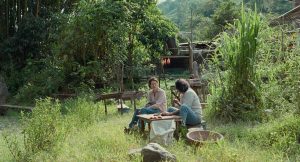
Apichatpong Weerasethakul, Memoria, 2021, Courtesy of the artist and NEON
“MEMORIA is one of the greatest movies you’ll see—or hear—in a theater this year.” – Justin Chang, Los Angeles Times
“An emotionally wrenching and intellectually fulfilling experience.” – A.O. Scott, New York Times
Mysterious and transfixing, MEMORIA stars Tilda Swinton as an expat scientist living in Colombia who is suddenly beset by sounds only she can hear. In her quest to find the source of these sonic disturbances, she travels through lush countrysides, busy Bogotá streets, and austere brutalist architecture, chasing ghosts, missing persons, and the reverberating echoes of the past. The film, which is only available to experience in theaters, will be followed by an extended conversation with Weerasethakul, who will discuss the ideas and experiences that drive his practice.
Presented in partnership with Northwestern University’s Department of Radio/TV/Film and The Block Museum.
Colombia, 136 minutes plus discussion
Format: 35mm
In Spanish and English with English subtitles
__
ABOUT
Apichatpong Weerasethakul is recognized as one of the most original voices in contemporary cinema. His works draw upon the interplay between lived and cinematic time, Buddhism, and science fiction to explore memory and complex social issues. Weerasethakul’s features, short films, and installations have gained widespread international recognition and numerous awards, including the Cannes Palme d’Or in 2010 for UNCLE BOONMEE WHO CAN RECALL HIS PAST LIVES, the Cannes Jury Prize in 2021 for MEMORIA and in 2014 for TROPICAL MALADY, and the Cannes Un Certain Regard Award in 2002 for BLISSFULLY YOURS. His installations have been exhibited and collected by institutions around the world. He is the recipient of the Sharjah Biennial Prize, the prestigious Yanghyun Art Prize in South Korea, and the 2016 Principal Prince Claus Award from the Netherlands.
Marwa Arsanios: Who is Afraid of Ideology, Part 3 and Part 4
Posted by | otaper | Posted on | April 20, 2023
Thursday, April 20, 6:00 p.m.
Join Berlin and Beirut-based artist Marwa Arsanios for her remarkable multi-part project on collectivity, feminism, environmentalism, and resistance, WHO IS AFRAID OF IDEOLOGY.
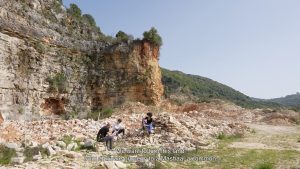
Marwa Arsanios, Who Is Afraid of Ideology Part 4: Reverse Shot, 2022. Courtesy of the artist and mor charpentier.
“A meditation on the relationship of human beings to the natural world, and a reckoning with the authoritative posture of conventional documentary filmmaking. – David Markus, Frieze
Since 2017, Beirut and Berlin-based artist Marwa Arsanios has been working on a series of remarkable films collectively titled WHO IS AFRAID OF IDEOLOGY that explore ecology, feminism, collectivity, and resistance through Indigenous and women’s communities in Kurdistan, Colombia, and Lebanon. She presents the project over two evenings, each followed by a conversation about her subjects and innovative approach.
In WHO IS AFRAID OF IDEOLOGY PART 3: MICRO RESISTENCIAS, Arsanios turns her focus to the seed and its potential as a tool for political agency and resistance. She travels to central Colombia, where she spends time with a group of Indigenous women farmers devoted to safeguarding native seeds and agriculture. As these women buttress their communities against transnational agricultural conglomerates threatening the land, Arsanios draws parallels to the political violence indigenous communities have faced at the hands of paramilitary forces since the 1980s.
Arsanios returns to the Middle East in WHO IS AFRAID OF IDEOLOGY PART 4: REVERSE SHOT which begins with the entreaty: “imagine a land without ownership.” Tracing her own efforts to transform a piece of privately-owned land in Northern Lebanon into a masha’a—a land for the commons—she brings together archival research, legal theory, and oral histories to chart a history and future of the region from the perspective of the land itself.
2020–22, Colombia, Lebanon, 66 minutes plus discussion
Format: digital video
In Spanish, Arabic and French with English subtitles
__
ABOUT
Marwa Arsanios is an artist, filmmaker and researcher focusing on gender relations, collectivism, urbanism, and industrialization. Solo exhibitions include the Mosaic Rooms, London (2022); Contemporary Arts Center, Cincinnati (2021); Škuc Gallery, Ljubljana (2018); Beirut Art Center (2017); Hammer Museum, Los Angeles (2016); FKA Witte de With, Rotterdam (2016); Kunsthalle Lissabon, Lisbon (2015); and Art in General, New York (2015). Her work has also been included in Documenta 15, Kassel (2022); 5th Mardin Bienali (2022); 3rd Autostrada Biennale, Pristina (2021); 11th Berlin Biennale (2020); The Renaissance Society, Chicago (2020); 2nd Lahore Biennale (2020); Kunsthalle Wien, Vienna (2019); 1st Sharjah Architecture Triennial (2019); and San Francisco Museum of Modern Art (2019), among many others. She received the Georges de Beauregard International Prize at FID Marseille (2019), the Special Prize of the Victor Pinchuk Foundation’s Future Generation Art Prize (2012), a scholarship from the Akademie Schloss Solitude in Stuttgart in 2014, and the Tokyo Wonder Site, Tokyo Arts and Space Residency in 2010. She is a cofounder of the 98weeks Research Project.
Tags: Animation > Artist's Film > Colombia > Experimental Essay > Lebanon > Marwa Arsanios
About
Conversations at the Edge is a weekly series of screenings, performances, and talks by groundbreaking media artists.
CATE is organized by SAIC's Department of Film, Video, New Media, and Animation in collaboration with the Gene Siskel Film Center and SAIC's Video Data Bank.
Programs take place at the Gene Siskel Film Center (164 N. State / Chicago, IL / 312.846.2600), unless otherwise noted.